
Music Room Acoustic Design
A basement drum room was sending sound through the entire house — even after carpet, blankets, and a solid-core door. This residential music room acoustic design shifted the project from trial-and-error fixes to a room-specific strategy for sound isolation, vibration control, and better in-room sound.
Then use the body copy below in shorter sections:
DIY Acoustic Fixes Didn’t Work
The room was tucked away in the basement, but the drums were still carrying through the house. For the musician, the space was frustrating to play in. For the rest of the household, the sound wasn’t staying contained.
They had already tried the obvious fixes: carpet on the floor, blankets on the walls, and a solid-core door. Each helped a little in theory, but none solved the real problem.
From Trial-and-Error to Acoustic Design
Instead of adding more products and hoping for the best, we stepped back and asked what the room actually needed to do.
The design had to address three problems at once: reduce sound transfer through the house, limit vibration through the home’s structure, and improve the sound quality inside the room so it would not become flat, muffled, or dead.
A Room-Specific Music Room Design
The final design used a layered acoustic strategy: sound blocking where noise was escaping, structural separation where vibration was traveling, and carefully placed in-room acoustic treatments to improve tone, control reverberation, and make the space better to play in.
This was not a studio-in-a-box or a guesswork upgrade. It was a room-specific residential acoustic design response based on how sound was actually behaving in the home.
Have a Room that Isn't Working?
Whether the issue is sound, layout, comfort or function, EcoScapes can help turn a frustrating space into a designed solution.
Historic Home Renovation & Rebuild
The Original Late 1700s Cabin: Master Bedroom
This project began following an electrical fire and required a near full rebuild. The goal was to restore the home’s historic structure while integrating modern systems and sustainable design strategies.
True to traditional farmhouses, this residence features multiple additions. The core consists of two log cabins from the late 1700s, with subsequent additions from the early 1800s and mid-1900s.
After a 95% gutting due to smoke and water damage, the home's history was uncovered, allowing for a contemporary renovation that showcases its historic aspects.
Sustainable design components include high R-value insulation, a vapor barrier, a mini-split HVAC system, Renewal by Andersen windows and doors, LED lighting with occupancy controls, water-saving fixtures, low-VOC finishes, and recycled and reused materials.

Music Room
This hallway, connecting the original log cabins since the early 1800s, is wider than usual due to the tradition of separating the sleeping cabin from the kitchen cabin to prevent fire hazards. This spacious design perfectly accommodates the family's musical instruments, allowing their music to resonate beautifully throughout the home.
Connected Spaces
In a farmhouse, the back of the house is often the front. The entry originally led to the kitchen and a butcher room, which was transformed into a studio and farm mudroom in the new design. The wall between the studio and entry was removed, and the doorway to the kitchen was widened, creating an easy traffic flow and open design.

Living Room
The living room ceiling was raised from 6'-9" to 8'-0", creating an open and airy space. The wood trim on either side of the room seamlessly integrates the historic log walls with the 1950s addition. The fireplace was resurfaced with contemporary stone, and cozy reading nooks were created on either side for the family's children.
Second Floor
The log walls extend up the early 1800s staircase, now visible thanks to the raised ceiling and light shelf. A new railing and barn door introduce warm wood materials to the upstairs hallway, while carpeting softens the stairs and sleeping areas.
Legacy Farmhouse Design
Arial View of Legacy Farmhouse
A New Home Rooted in an Existing Farm
This ground-up residential design began with the land.
The home was built on a legacy farm, where the site itself carried meaning. Instead of clearing the easiest building pad or forcing a standard plan onto the property, the house was carefully placed so existing trees could remain and the home could take advantage of long views across the farm.
The result was a new farmhouse that felt connected to its setting from the beginning.
Designed for Farm Life
This was not a decorative farmhouse. It was designed for a functioning farm.
The plan included a mudroom, laundry and shower with direct access from the garage so farm dirt could stay out of the main living spaces. That service zone protected the home’s more finished interiors while supporting the daily reality of chores, animals, weather and outdoor work.
The design allowed the house to be both practical and beautiful — a home that could support farm life without letting the farm take over every room.
Planned for Aging-in-Place
The home was also designed with long-term living in mind.
The main living spaces were kept on one level, and future accessibility was considered during the original design process. The front walk wall was made long enough to visually screen a ramp if one ever needed to be added. The primary bathroom was also planned so it could be adapted for ADA use with minor upgrades rather than major reconstruction.
These choices did not make the home feel institutional. They simply gave the house more flexibility over time.
Light, Views and Daily Living
Clerestory windows brought natural light deep into the interior, creating bright open living spaces while maintaining privacy and wall space. The main living areas were oriented to support family life and preserve a strong visual connection to the surrounding farm.
Warm wood cabinetry, open gathering spaces and custom interior features gave the home a practical farmhouse character without making it feel overly themed.
A Farmhouse That Belongs to Its Site
Good residential design is not just about the floor plan. It is about how the home sits on the land, how light moves through the spaces, how daily work is supported and how the house can continue to serve the people who live there over time.
This project reflects a site-sensitive approach to residential architecture: preserve what matters, design for the way the family actually lives and let the land guide the home.
Client Testimonial
"Lisa Wynne was a student at University of Illinois when we met her and asked her to design a Prairie-style home inspired by Frank Lloyd Wright. She visited the building site and designed the perfect home for our family.
Our builder told us the plans were perfect - they required no corrections during construction. The home was featured in the local newspaper and we've enjoyed sharing it with many visitors over the years. Lisa also designed our custom fireplace, which remains one of our favorite features of the home."
- Marie L. Monk
Hidden Entrance
The primary entrance is tucked behind a retaining wall, preserving the clean horizontal lines of the Prairie-style home while providing the length needed for a future accessible ramp. The accessibility features were designed into the home from the beginning—seamlessly integrated so they enhance the architecture rather than draw attention to themselves.
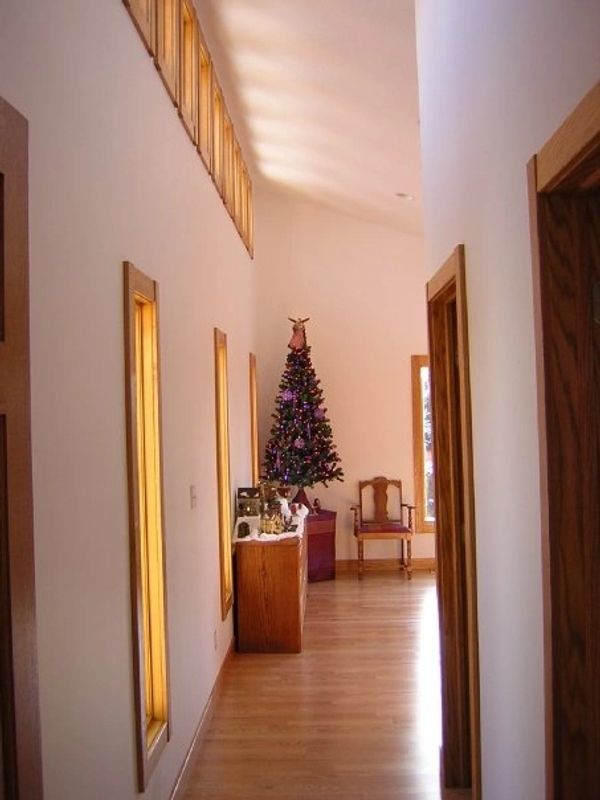
Natural Light Connecting Spaces
A series of tall, narrow north-facing windows brings soft, even daylight into the hallway connecting the master suite to the home's living spaces. The consistent northern exposure reduces glare, minimizes daytime lighting needs, and creates a comfortable transition between public and private spaces.
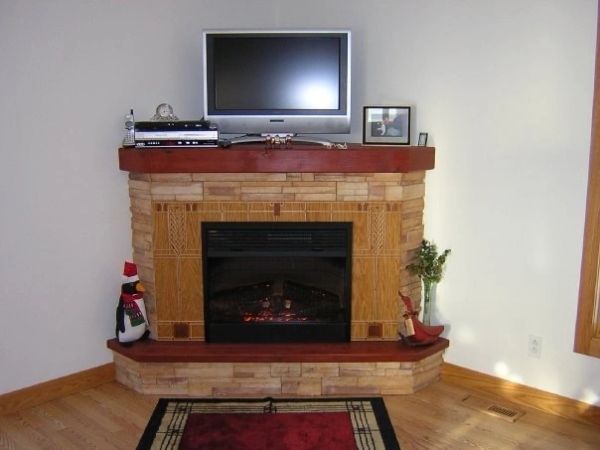
Custom Prairie-Style Fireplace
Designed as the focal point of the living room, the custom fireplace emphasizes the strong horizontal lines characteristic of Prairie architecture. Stylized wheat motifs flanking the firebox celebrate the agricultural heritage of the property, creating a design that is both regionally inspired and integral to the home's architectural character.
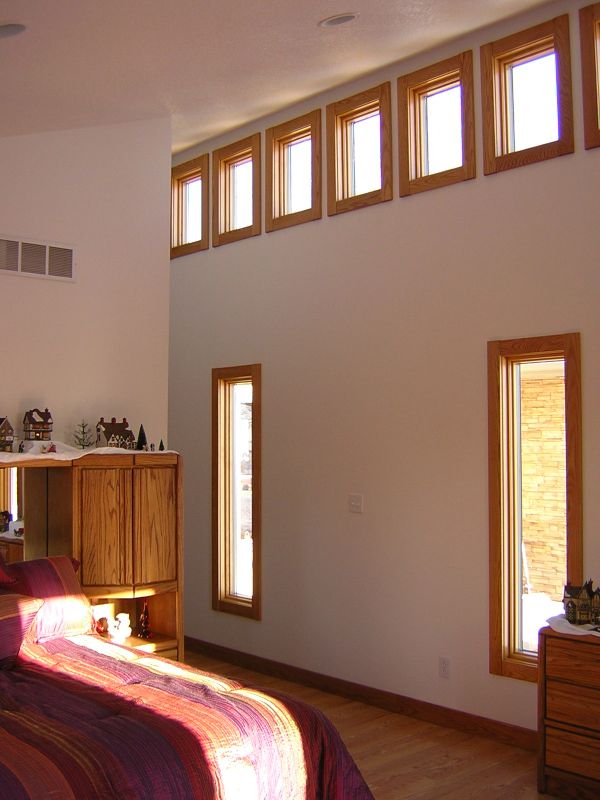
Courtyard Daylighting
South-facing windows and a clerestory bring abundant natural daylight into the primary bedroom, while the three-walled courtyard provides privacy and helps moderate direct solar exposure. The result is a bright, comfortable space that maintains a strong connection to the outdoors
Hidden Acres Homestead Master Plan
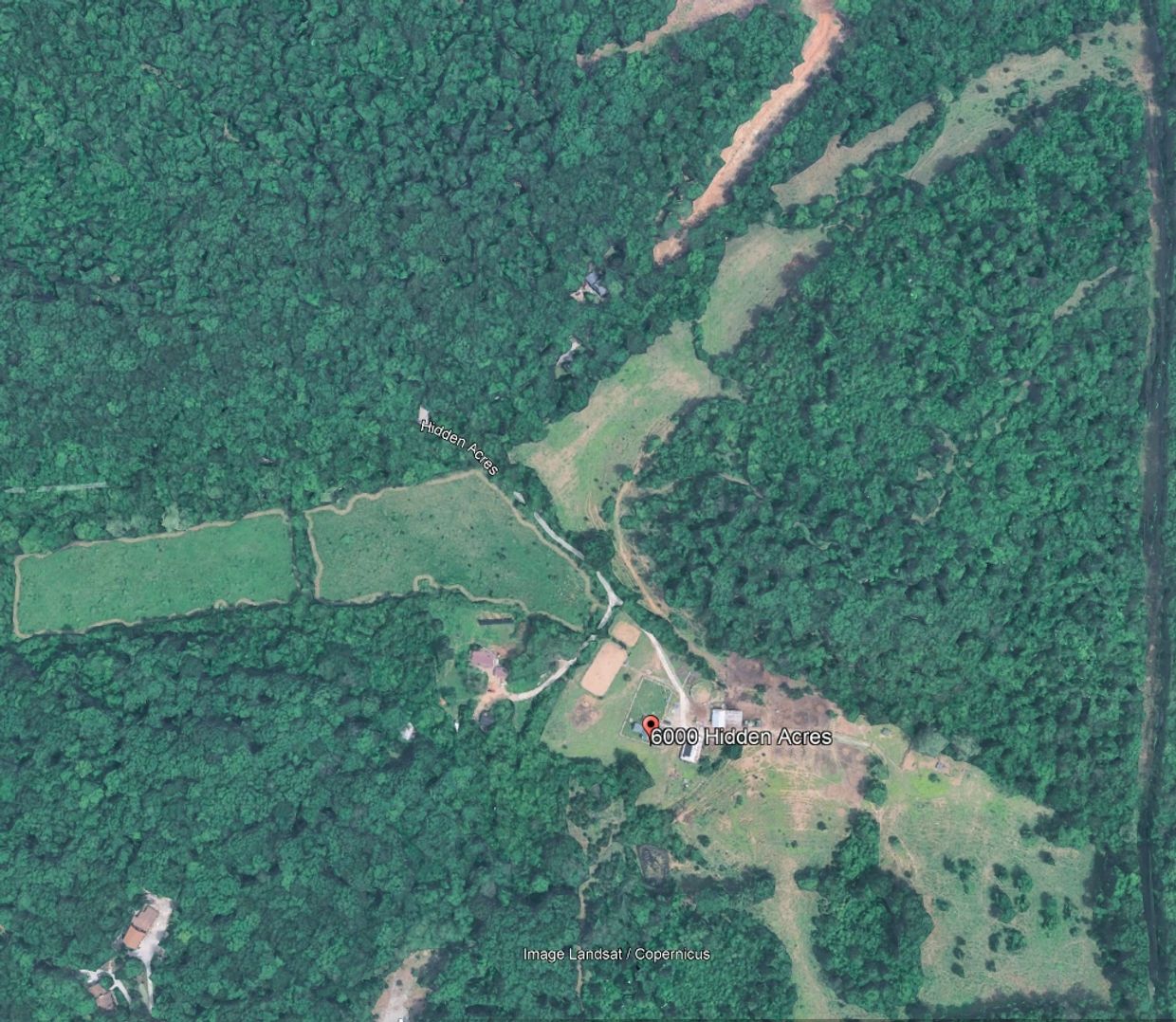
Architecture • Infrastructure • Conservation • Land Management
A Living Master Plan for Climate Resilience
Project Overview
Hidden Acres Homestead is a 103-acre master planning and restoration project demonstrating how architecture, infrastructure, conservation, and land management can work together to improve the long-term resilience of a rural property.
Nestled within two natural valleys, the property offers unique opportunities for water management, ecological restoration, and climate-responsible horse keeping. The master plan builds upon these natural landforms to improve drought resilience, restore ecological function, and strengthen the property's long-term productivity.
Rather than treating buildings, utilities, landscapes, and operations as separate systems, the project integrates them into a coordinated strategy that strengthens environmental performance, operational reliability, and long-term sustainability. Every improvement is evaluated as part of a larger vision—creating a property that becomes more resilient over time.
Design Objectives
The Hidden Acres Homestead Master Plan was developed to:
- Improve climate resilience
- Preserve and restore historic structures
- Increase energy independence
- Improve water security
- Restore ecological function
- Reduce long-term operational risk
- Support sustainable horse farm operations
- Increase long-term self-sufficiency through resilient land management
- Demonstrate systems-based sustainable design
Historic Farmhouse Restoration
The historic farmhouse has been restored while preserving its historic character and adapting it for long-term performance.
Completed improvements include:
- Historic restoration and renovation
- High-efficiency mini-split HVAC system
- Wood-burning furnace providing resilient backup heat
- Energy-efficient building improvements
- Interior renovations that improve long-term functionality while preserving the home's character
Rather than replacing the farmhouse, the goal has been to prepare it for another century of use while improving comfort, efficiency, and resilience.
Renewable Energy & Infrastructure Resilience
Located at the end of an overhead electrical distribution line, the property experiences a higher risk of utility interruptions than many residential sites.
To improve long-term resilience, the property includes a 40-panel solar photovoltaic system with dual inverters and battery backup. Installed more than seven years ago, the system reduces dependence on the electrical grid while maintaining essential operations during utility outages and severe weather events.
Reliable infrastructure extends beyond electricity. The property also incorporates multiple layers of water resilience, including:
- Approximately 300 gallons of emergency water storage supporting household and livestock needs
- Reverse osmosis drinking water with 2.5 gallons of dedicated purified water storage, supplied through the home's water softener system
Together, these systems improve the property's ability to continue operating during temporary utility disruptions while reducing long-term operational risk.
Environmental & Site Planning
Hidden Acres Homestead contains three EPA-protected Type 2 wet-weather streams, creating significant environmental constraints that directly influence site planning and future development.
Rather than viewing these constraints as obstacles, the master plan embraces them as part of the property's natural infrastructure. Environmental setbacks prohibit permanent roofed structures within 100 feet of the stream corridors, requiring alternative approaches for equestrian facilities.
The all-weather riding arena and round pens were intentionally designed with erosion-control measures that retain footing materials within the riding areas while protecting adjacent waterways from sediment migration. These strategies support water quality, reduce maintenance, and demonstrate how thoughtful site planning can balance environmental stewardship with the operational needs of a working horse property.
Climate-Responsive Design
The Hidden Acres master plan incorporates passive design strategies that improve comfort, reduce maintenance, and reduce energy consumption by working with seasonal environmental conditions rather than against them.
Seasonal Shade
Rather than constructing permanent roof structures where environmental setbacks restrict development, water-permeable shade structures provide seasonal protection at the round pen and barn while allowing rainfall to reach the ground below.
Additional shade is created through the strategic placement of deciduous trees surrounding the riding arenas. During the summer months, the tree canopy reduces heat gain for horses and riders, improving comfort while minimizing the need for additional constructed shade.
Renewable Site Lighting
The riding arenas are illuminated using solar-powered flood lighting, eliminating the need to extend underground electrical service throughout the property while reducing long-term operating costs.
The lighting strategy was intentionally coordinated with the landscape design. During the winter months—when shorter days require arena lighting—the deciduous trees naturally lose their leaves, allowing increased sunlight to reach the solar panels and maintain reliable performance.
Together, these strategies demonstrate how architecture, landscape design, and renewable infrastructure can be planned as complementary systems that improve long-term resilience while working with the natural seasonal cycles of the site.
Land Restoration
Landscape restoration is being implemented in phases to improve ecological health, increase drought resilience, and strengthen the long-term productivity of the property.
Completed & In Progress
The front one-third of the property has undergone significant restoration, including:
- Removal of invasive plant species
- Construction of terraces that slow stormwater runoff, increase groundwater infiltration, and reduce drought impacts
- Transition of pastures to predominantly native forage species suitable for horse grazing
Together, these improvements reduce erosion, improve water retention, and begin restoring natural ecological processes across the site.
Future Phases
The remaining two-thirds of the property will continue this phased restoration approach through:
- Additional invasive species removal
- Expansion of pasture acreage
- Construction of additional terraces
- Continued establishment of native grazing systems
Future restoration also includes incorporating biochar within the terrace systems to establish long-term microbial habitat within the soil. By supporting stable nutrient-producing microbial colonies, biochar is intended to improve soil health, increase nutrient availability, enhance water-holding capacity, and strengthen drought resilience over time.
Rather than relying solely on external soil amendments, this strategy focuses on rebuilding healthy living soils capable of supporting productive pasture ecosystems for decades to come. The long-term objective is to create a property that supports self-sustained horse keeping, reducing dependence on imported hay while strengthening resilience as climate conditions continue to change.
Integrated Land Management
The master plan incorporates multiple animal species as functional components of the property's ecological management strategy. Rather than relying exclusively on mechanical maintenance or chemical treatments, each species contributes to the long-term health and function of the landscape.
Chickens
Free-ranging chickens forage for insects and larvae within horse manure and surrounding areas, helping reduce fly populations and other pasture pests while naturally recycling nutrients back into the soil.
Potbelly Pigs
Free-ranging potbelly pigs naturally aerate pasture soils through rooting behavior, improving soil structure and supporting healthy biological activity without mechanical cultivation.
Sheep
Sheep selectively graze broadleaf weeds throughout the pastures, reducing undesirable vegetation while improving grazing conditions for horses.
Goats
Goats browse woody vegetation and invasive growth along fence lines and wooded edges, reducing manual maintenance while helping control unwanted brush.
Together, these integrated land management strategies reduce the need for mechanical mowing, herbicides, insect control, and other maintenance inputs while increasing the long-term productivity, ecological health, and resilience of the property.
Systems Thinking
Hidden Acres Homestead demonstrates that resilience is rarely achieved through a single technology or individual project. Instead, it is created by understanding how buildings, infrastructure, landscapes, and living systems interact over time.
Historic preservation, renewable energy, resilient infrastructure, environmental and site planning, climate-responsive design, land restoration, and integrated land management have been intentionally designed to function as interconnected parts of a larger whole.
Each system supports the others:
- Renewable energy improves operational resilience.
- Water storage protects household and livestock operations.
- Terraces improve groundwater infiltration and drought resilience.
- Healthy soils support productive native forage.
- Integrated land management strengthens ecological function while reducing maintenance.
- Seasonal shade improves comfort while supporting solar energy production.
- Historic preservation extends the useful life of existing buildings while reducing material consumption.
Rather than solving individual problems, the master plan demonstrates how thoughtful planning can create long-term environmental, operational, and financial resilience.
Project Status
Hidden Acres Homestead is an active, evolving master plan.
Completed improvements continue to inform future phases of development, creating a living demonstration of climate resilience through architecture, site planning, conservation, and integrated sustainable infrastructure.
Bringing Systems Thinking to Your Property
Every property has unique opportunities and constraints.
Hidden Acres Homestead demonstrates how thoughtful master planning can work with the natural characteristics of a site to improve resilience, reduce long-term operating costs, and strengthen environmental performance.
Whether restoring a historic home, improving an existing property, or planning new construction, resilient design begins with understanding how buildings, infrastructure, landscapes, and natural systems function together as one integrated whole.
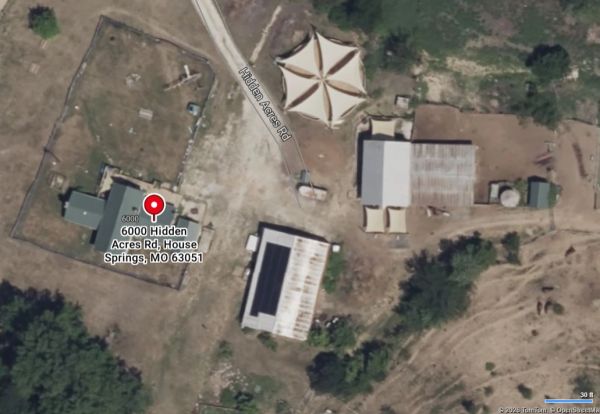
Farm Proper
The operational heart of Hidden Acres Homestead integrates historic restoration, climate-responsive design, and sustainable horse keeping. Terraces slow stormwater runoff, increase groundwater infiltration, reduce erosion, and improve drought resilience as part of the property's long-term land restoration strategy.
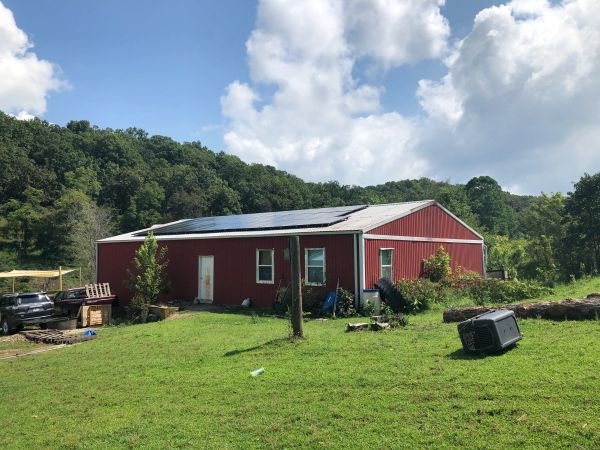
Solar Array
Forty-panel solar photovoltaic system with dual inverters and battery backup supporting long-term energy resilience.
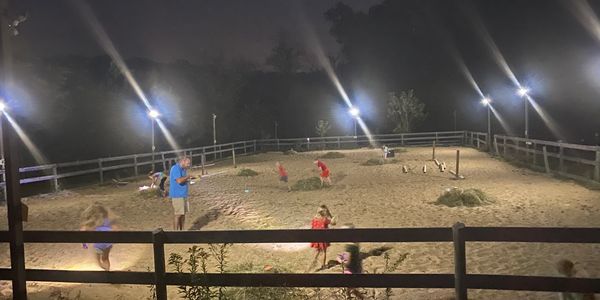
Arena Solar Flood Lights
Solar-powered flood lighting provides reliable illumination for the riding arenas while eliminating the need to extend underground electrical service across the property. The lighting system was coordinated with strategically placed deciduous trees, allowing the solar panels to receive maximum sunlight during the shorter days of winter when arena lighting is needed most.
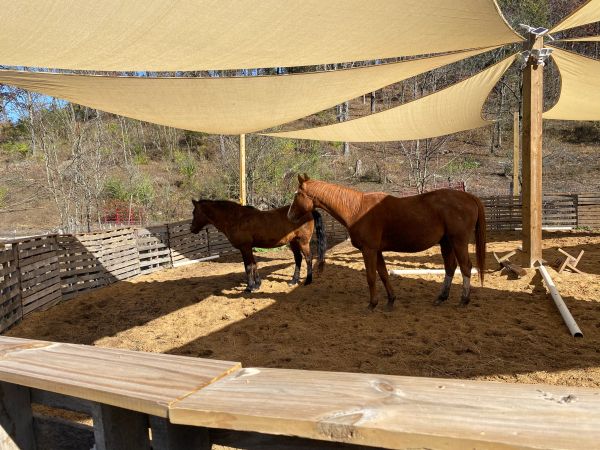
Round Pen Shade Structures
Water-permeable shade structures provide seasonal protection for horses and riders while allowing rainfall to reach the ground below. This approach creates a comfortable working environment without introducing permanent roof structures near environmentally protected stream corridors.